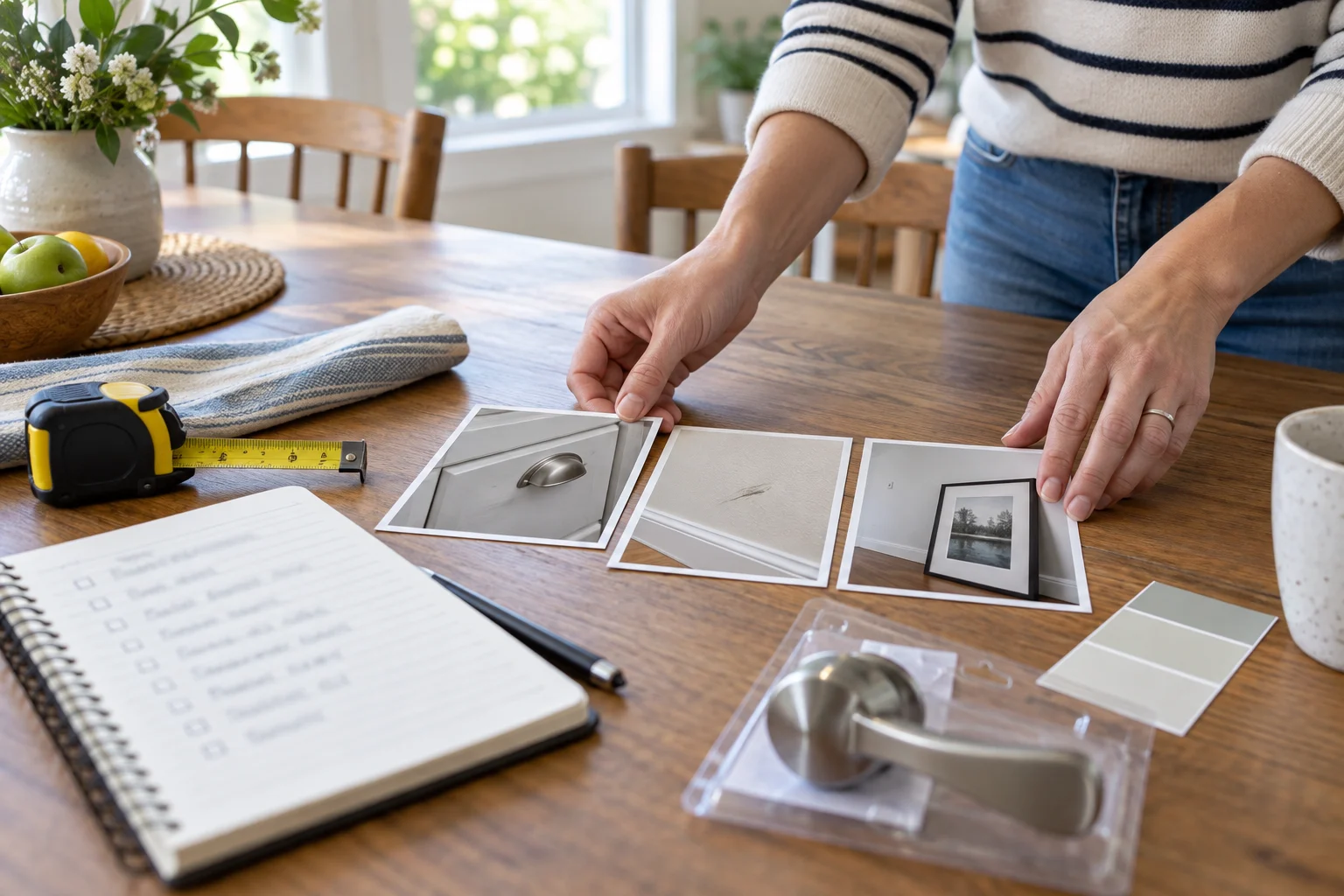
A good handyman to-do list turns a scattered pile of small annoyances into one efficient visit: each job written clearly, grouped by room, with photos and parts ready. Bundling repairs saves you repeated scheduling and gives your handyman a realistic picture of the day. This guide shows how to build the list, what usually fits in one visit, and which items belong to a licensed trade instead.
Start your handyman to-do list with a room-by-room walk-through
Walk the house with your phone and write down everything that bothers you, room by room. Don't filter yet. The sticking bedroom door, the towel bar that pulls away from the wall, the missing cabinet bumpers, the dripping hose bib, the blinds that won't stay up: put them all on the list.
Write one task per line, with a location and a specific description. Kitchen, upper cabinet left of the range, door sags and rubs is far more useful than fix kitchen cabinets. Add quantities and sizes where they matter, such as three pictures to hang or a 65-inch TV to mount on drywall. Take a close-up photo of each problem and a wider shot that shows the surrounding area.
Sort each item into ready, decide or refer
Once the list is written, sort each line into one of three groups. This is the step that makes a bundled visit actually work.
- Ready: the fix is clear and any parts are already in the house
- Decide: you still need to choose a product, finish or position
- Refer: the job needs a licensed trade, a permit or a larger quote
Ready items go straight to your handyman. Decide items should be settled before the visit: pick the faucet, buy the curtain rods, choose the paint. If you're unsure whether a product fits, send a link before buying. Refer items come off the handyman list and move to a separate conversation, which we explain below.
What fits into a single handyman visit
Small repairs and installations with a clear scope bundle well, especially when several happen in the same room or use the same tools. Typical examples include:
- Adjusting or rehanging doors, cabinet doors and drawer fronts
- Replacing hinges, pulls, knobs, door stops and weatherstripping
- Mounting TVs, mirrors, shelves, art and curtain rods
- Patching small drywall holes and touching up paint
- Assembling flat-pack furniture and securing it to the wall
- Caulking tubs, sinks and backsplashes
- Swapping a like-for-like faucet or fixture on existing connections
As a rule of thumb, group tasks by room and by trade, and put the jobs that make the most mess first so cleanup happens once. Keep in mind that drywall patches often need drying time before paint, so it helps to plan those early in the day or accept a short return visit. Put your list in priority order so that if time runs short, the most important items are done.
Know the permit-free boundary
Handyman work covers small jobs under $1,000 that don't need a permit. That boundary keeps the work simple, and it tells you when to bring in someone else. Anything larger, or anything that needs a permit, is quoted by a licensed contractor instead of being added to a handyman visit.
In the City of Los Angeles, permits are issued by the Department of Building and Safety, and many other cities in LA County run their own building departments. Adding new electrical circuits, moving plumbing lines, replacing a water heater, altering structure or removing walls typically require permits and a licensed trade. When in doubt, list the item and ask; it's better to sort it out before the visit than halfway through.
- New circuits, new outlets where none exist, or panel work
- Moving or adding plumbing supply or drain lines
- Water heater, furnace or AC replacement
- Removing or opening walls, or any structural change
- Roofing, window replacement or exterior stair repairs
- Any single job likely to exceed $1,000 in labor and materials
Prepare parts, photos and priorities
For every Ready item, gather what's needed and keep it together: the new hinges in their bag, the shelf brackets with the shelf, the replacement faucet in its box with the instructions. Open boxes ahead of time and check the parts list. Note paint colors and keep leftover paint for touch-ups.
Then share the list with photos, product links, and your priority order. Mention whether the home is occupied, whether pets will be present, and any building or parking rules. The day-of details are covered in our guide to preparing your home for a handyman visit.
Keep the list going between visits
A to-do list is most useful when it never really closes. Keep it as a shared note on your phone and add items the moment you notice them, with a quick photo. When the list reaches a comfortable size for a visit, or when one item becomes urgent, it's time to book.
Seasonal items fit well too: checking weatherstripping and door sweeps before the rainy months, or tightening patio furniture and gate hardware before summer. After each visit, move completed items to a done section with the date, so you have a simple maintenance record for the home.
What we need from you to quote it
Send the organized list with one task per line, grouped by room, plus close-up and wide photos for each item. Include product links or model numbers for anything you've bought, wall type if you know it for mounting jobs, your address or ZIP code and your preferred days. If you're outside the Westwood area, a longer, well-organized list also helps us plan travel and scheduling. Items that fall outside handyman scope will be flagged, so you know what needs a separate quote from a licensed contractor.