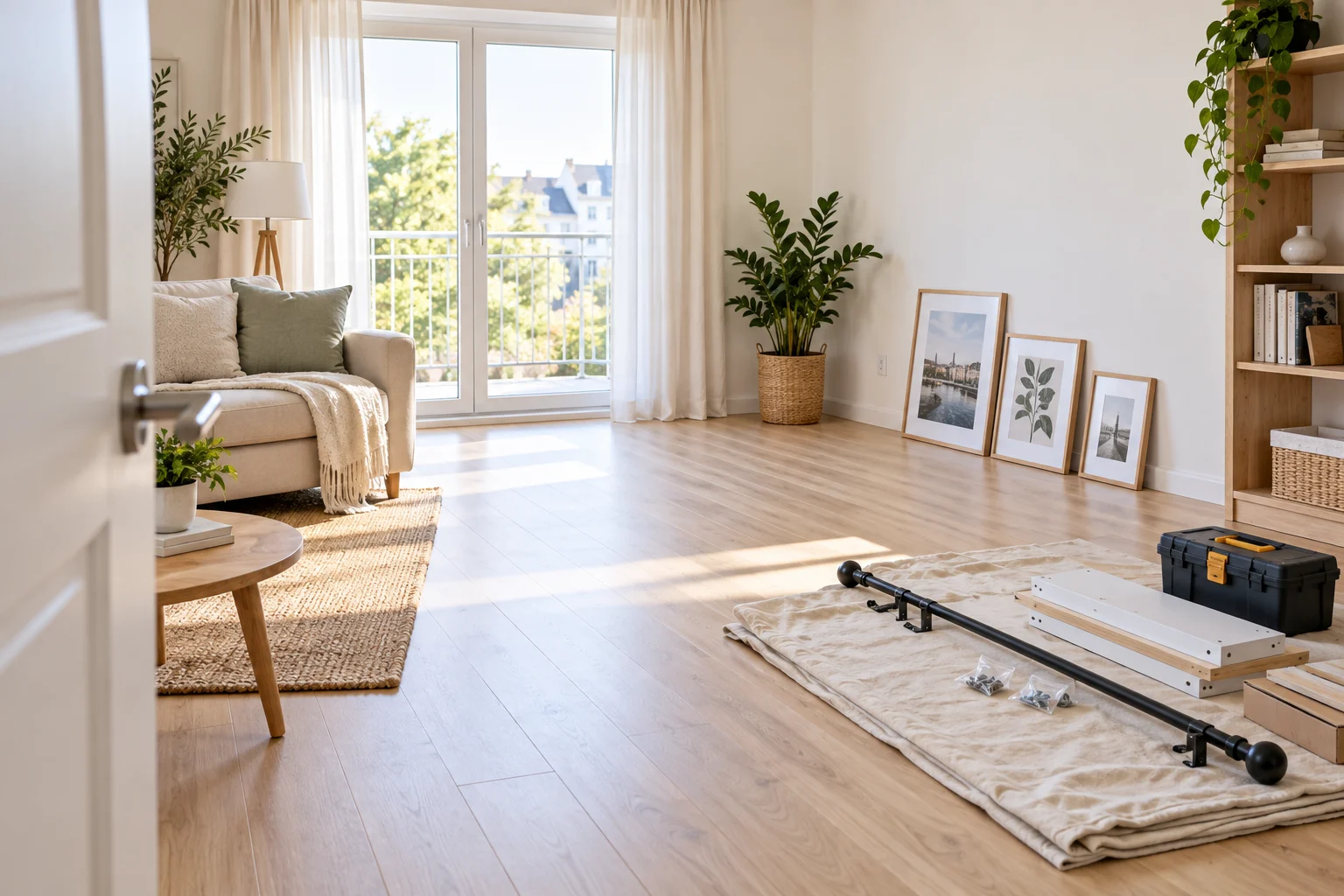
The best way to prepare for a handyman visit is to handle the practical details before the doorbell rings: where your handyman will park, how they get into the building, where pets will be, and whether the parts and fixtures are already on site. A little preparation the day before means more of the visit goes to the actual repairs. This guide covers the day-of logistics for homes and apartments in and around Westwood.
How to prepare for a handyman visit the day before
Your task list should already be agreed when you book. The day before, reread it and confirm that nothing has changed. If you have added a job, say so now rather than at the door, so your handyman can bring the right tools and fasteners and confirm whether it fits the visit. Small jobs that need no permit and come in under $1,000 are handyman work; anything bigger, or anything that turns out to need a permit, is quoted separately by a licensed contractor.
Confirm the arrival window, the address including unit number, and the name and phone number of the person who will be home. If you won't be there, arrange who lets your handyman in and who can answer questions or approve a change.
Plan parking and building access in Westwood
Parking is the most common reason a visit starts late on the Westside. Many residential streets around Westwood and UCLA have posted time limits, street-cleaning days or permit-only blocks, and meters near Westwood Village fill up quickly. If you have a driveway, a guest spot or a visitor parking pass, set it aside and share the details in advance.
For condos and apartment buildings, check the building rules a few days ahead. Some buildings require contractors to check in with the front desk or management, use a loading area or service elevator, or reserve the elevator for a specific time. Others ask for a certificate of insurance before any vendor can work inside. Find out what applies and pass it on so there are no surprises in the lobby.
- Parking spot, driveway or visitor pass, with any time limits
- Gate code or entry instructions sent privately, not posted publicly
- Front desk or management contact and check-in rules
- Service elevator or loading dock reservation, if required
- Building quiet hours or restrictions on drilling and noise
- Name and phone number of the person on site
Keep pets, kids and valuables out of the work area
An open front door, a ladder and a toolbox are a bad combination for a curious dog or cat. Before your handyman arrives, settle pets in a closed room away from the work, or arrange for them to be out of the house. Mention any pets when you confirm the visit, especially if an animal is anxious around visitors or tends to slip out when the door opens.
The same goes for young children: plan for them to be somewhere other than the room being worked on, since drilling, cutting and cordless tools create dust and noise. Put away jewelry, laptops, medication and personal paperwork from the rooms involved. You'll feel more relaxed, and your handyman won't have to work around your belongings.
Clear the work zones and protect finishes
Give each task enough room. For a TV or mirror mount, clear the wall and pull furniture back a few feet. For work under a sink, empty the cabinet. For a ceiling fixture swap or a closet rod, clear the floor below so a ladder can stand level. Take down artwork near a drilling spot and move anything fragile off nearby shelves.
If you have delicate floors or a light-colored rug on the path to the work area, mention it. Drop cloths and floor protection are normal, but knowing in advance helps. Make sure there is a nearby outlet for tools and good light in the space, and let your handyman know where the water shutoff and the electrical panel are if a job involves plumbing fixtures or light fixtures.
Have materials on hand and photos ready
Many small jobs stall because a part is missing. If you bought the fixture, faucet, shelving kit or furniture yourself, open the boxes the day before and check the contents against the parts list. Keep the hardware bags, instructions and receipts together with each item. If a kit is missing screws or a bracket, you'll have time to get a replacement.
Keep the photos you sent with your request on your phone. They help confirm exactly which door hinge, cabinet or wall section you mean, especially in a larger home. For wall mounting, know the item's weight and the height you want. Mark the center point with painter's tape if you have a preference, and have the TV model or mirror dimensions handy.
- All boxes opened and parts checked against the list
- Hardware, instructions and receipts kept with each item
- Paint color name or leftover paint for touch-ups
- Preferred mounting heights marked with painter's tape
- Water shutoff and electrical panel locations known
- Photos from your original request on your phone
What to expect at the door and at the end
When your handyman arrives, walk through the list together, one room at a time. Point out priorities, confirm the pricing approach you agreed on, and say which tasks can wait if time runs short. If something unexpected shows up, such as a rotted cabinet base or a wall that won't hold an anchor, ask for an explanation and the cost before anything is added.
Before your handyman leaves, check each item: doors close, shelves are level, fixtures work, and debris is cleaned up. Keep any leftover parts, spare hardware and paint, and note anything that remains open for a follow-up visit.
Next step: book your visit
Send us your task list, a few photos of each job, your address or ZIP code and your preferred days. Mention parking, building rules and pets up front, and we'll confirm the details before the visit. If you're still sorting out what to include, start with our guide to building a handyman to-do list.